
Imagine you are a category manager for a mid-sized European retail chain or a boutique lifestyle buyer in Munich. For years, your sourcing strategy was a game of compromise. You preferred the craftsmanship of Indian block prints and the weight of solid Sheesham furniture, but the “Duty Wall” often forced your hand toward lower-quality, mass-produced alternatives from duty-free regions.
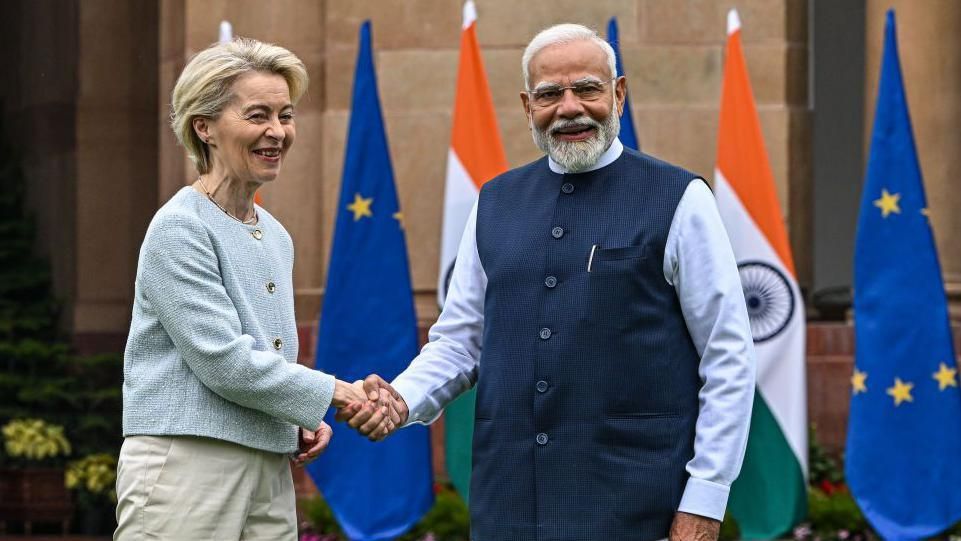
That wall collapsed on January 27, 2026.
With the formal signing of the “Mother of All Deals”—the EU-India Free Trade Agreement, the fiscal map of multiple sectors was redrawn overnight. In 2026, the real opportunity lies in knowing exactly which sectors moved from “luxury imports” to “strategically essential” inventory.
To master the landscape of Indian Industries Impacted by Tariffs 2026, we must look beyond the headlines. We must examine the specific consumer-facing shifts currently defining supply chains.
Part I: The Textile and Apparel Renaissance
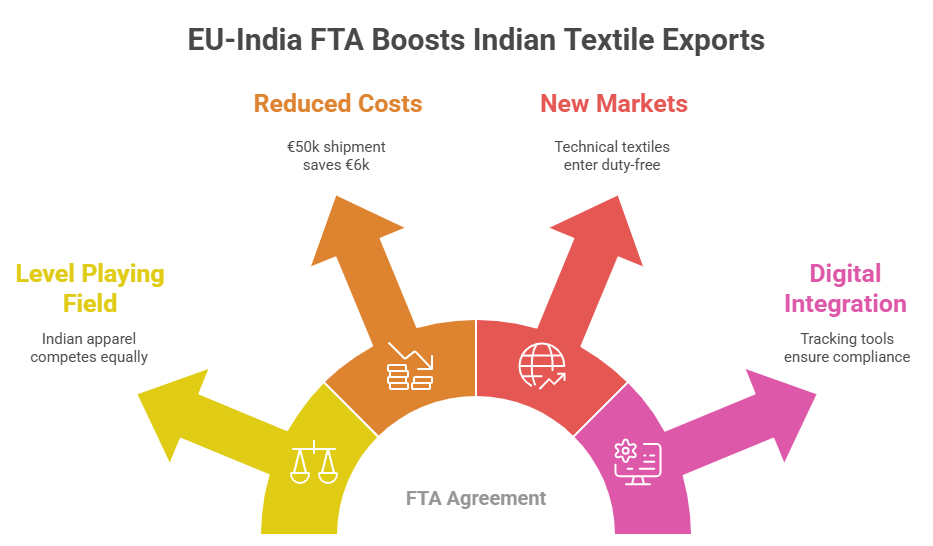
Historically, European importers of Indian garments faced a 10% to 12% disadvantage compared to competitors from least-developed nations. As of March 2026, the FTA has eliminated these duties, placing Indian organic cotton and high-fashion apparel on a level playing field with Vietnam and Bangladesh.
For European entities, this shift is most visible in premium cotton and home textiles. A €50,000 shipment of organic cotton bedding previously triggered roughly €6,000 in duties. Today, that same shipment enters the EU at 0% duty. Furthermore, technical textiles used in activewear and sustainable fashion now enjoy a 0% entry rate, down from the previous 8% average.
Manufacturing clusters like Tiruppur for knitwear and Jaipur in India for block-printed ethnic wear have already integrated new digital tracking tools. These systems ensure compliance with the EU’s strict traceability requirements, making these hubs the new go-to for compliant, high-quality apparel.
Part II: Handcrafted Furniture and Home Decor
The furniture sector has seen the most dramatic margin recovery. Under the 2026 trade framework, the EU has slashed tariffs on Indian wooden and metal furniture, supporting the European demand for sustainable, solid-wood alternatives.
Baseline duties on solid wood tables previously sat between 5% and 15%. In the current landscape, these products highlight how Indian Industries Impacted by Tariffs 2026 are shifting toward duty-free status. Consequently, European furniture distributors can now leverage Jodhpur’s world-class woodworking at a price point that rivals domestic flat-pack alternatives
Industry Comparison: The 2026 Lifestyle Pivot
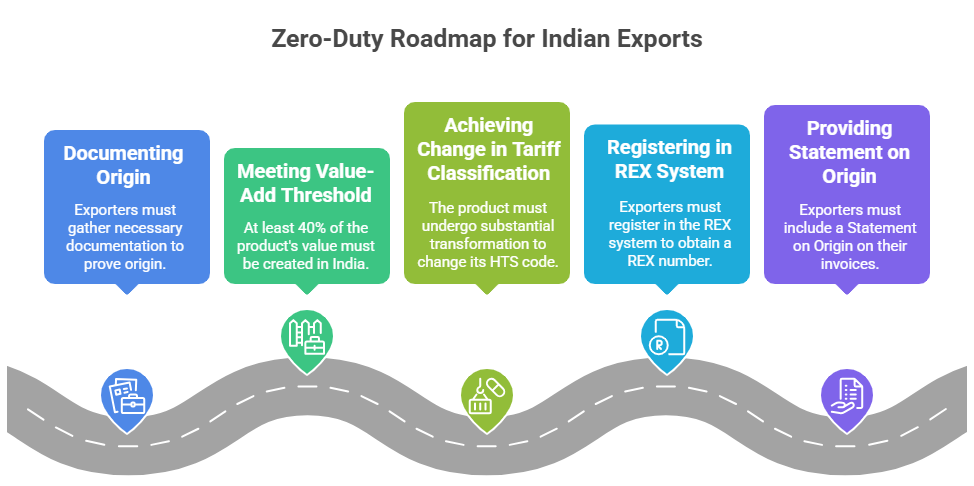
| Industry Sector | Pre-2026 Duty | March 2026 Status | Immediate Strategic Impact |
| Home Textiles & Bedding | 12% | 0% | Parity with duty-free neighbors. |
| Solid Wood Furniture | 10% – 15% | 0% | Margin recovery for Sheesham & Mango wood. |
| Gems & Silver Jewelry | 4% – 6.5% | 0% | Projected export doubling for EU retailers. |
| Handicrafts & Decor | Up to 10% | 0% | Competitive edge for unique artisanal items. |
Part III: Technical Conditions for Indian Industries Impacted by Tariffs
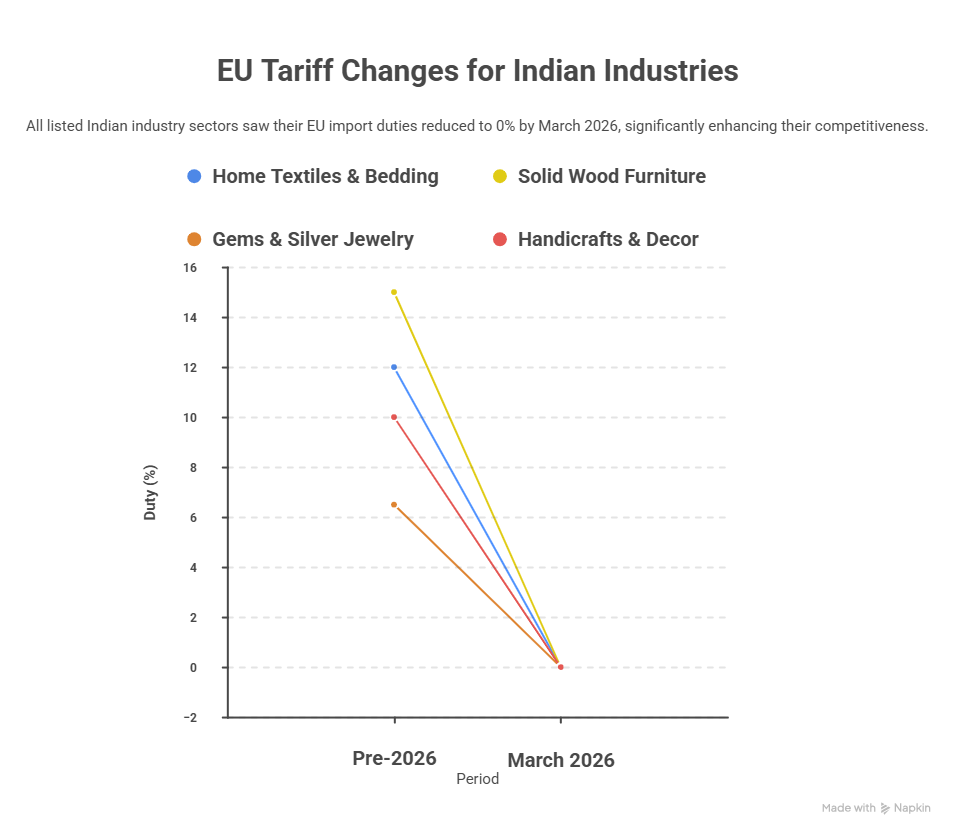
IAchieving 0% duty is a privilege earned through documentation, not an automatic right. To qualify, your shipment must satisfy three rigorous “Origin Gates”:
- The 40% Value-Add Threshold: At least 40% of the product’s final value must be created within India. For instance, if you source a hand-carved cabinet, the cost of Indian labor and local timber must outweigh any imported components (like European-sourced hinges or Chinese-made handles).
- The Change in Tariff Classification (CTC): The product must be “substantially transformed.” Converting raw timber into a finished dining set changes the HTS code, successfully unlocking the 0% rate.
- The Registered Exporter (REX) System: Exporters must be registered in the REX system and provide a specific “Statement on Origin” directly on the invoice. Without this REX number, customs will default to the old non-FTA rates, regardless of the product’s origin.
Part IV: Gems and Jewelry—The High-Value Advantage
While textiles and furniture move in volume, the jewelry sector offers the most significant per-unit savings. India’s jewelry industry—specifically silver and gemstone-studded pieces, represents a critical pillar of Indian Industries Impacted by tariffs 2026.
The elimination of the 4% to 6.5% duty on Indian jewelry is a game-changer for European luxury boutiques. With the FTA, sourcing intricately designed silver jewelry from Jaipur or diamond-studded pieces from Surat no longer carries the “import tax” penalty. This allows European brands to invest more in private labeling and custom designs, leveraging India’s unique artisanal techniques like Meenakari and Kundan at a much more competitive landed cost.
For further details on the final pricing of these goods, refer to our guide on India sourcing landed cost in 2026.
Part V: The Artisanal and Lifestyle Advantage
As discussed in our previous analysis of sourcing from India in 2026, HTS Optimization remains your secret weapon. Under the 2026 framework, “Certified Handicrafts” receive special priority. This is one of the few categories where 0% duty applies almost regardless of complex value-add math, provided the item is handmade.
If you source decorative brassware, ceramics, or hand-woven rugs, ensure your supplier is registered under the Indian Artisanal Board. Using HTS 9703 allows you to bypass the phased reductions other sectors face, hitting 0% duty immediately. Unlike other manufacturing hubs facing permanent punitive tariffs, India now offers a “zone of trust” for lifestyle brands.
Part VI: Navigating the 2026 Trade Corridors
To stay ahead of the Indian Industries Impacted by tariffs 2026, your sourcing strategy must be proactive.
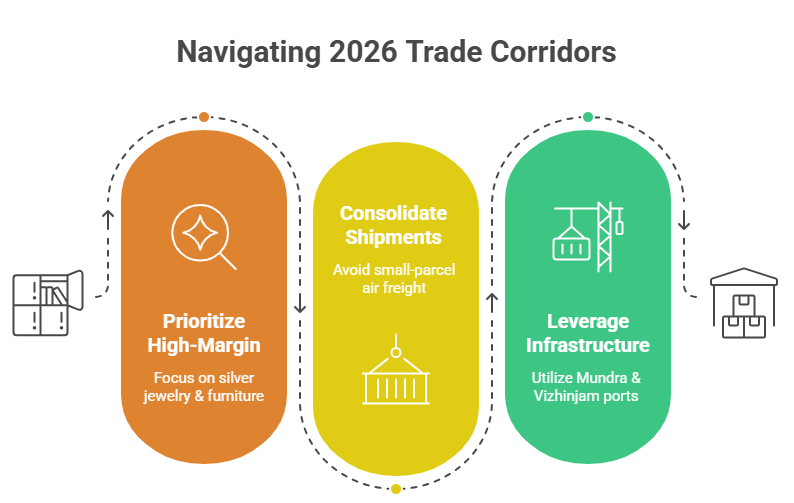
- Focus on High-Margin Sectors: Prioritize silver jewelry and handcrafted furniture where the 6%–15% duty drop offers an immediate capital injection for your procurement budget.
- Consolidation Efficiency: Since every shipment now requires a formal entry fee, avoid small-parcel air freight for jewelry. Consolidate into larger batches to dilute fixed brokerage costs.
- Logistics Efficiency: Leverage 2026 infrastructure upgrades at Mundra and Vizhinjam. These ports have modernized their handling for fragile home decor and high-value jewelry shipments, ensuring your savings aren’t lost to breakage or port delays.
The Indibuying Verdict: Engineering Your Competitive Edge

At Indibuying, we view the shift toward India not merely as a change in vendors, but as an evolution toward a transparent, data-backed supply chain.
The trade landscape of 2026 has transformed India from a “secondary option” into a primary strategic partner for European business. The industries identified above—Textiles, Furniture, Jewelry, and Handicrafts, are no longer just places to buy products; they are sectors where you can engineer a significant competitive advantage. For real-time tariff tracking, procurement teams should consult the Official EU Trade Helpdesk.
By combining the duty-free benefits of the FTA with a rigorous approach to HTS classification, you can achieve a level of supply chain resilience that was previously impossible. In 2026, the firms that win are those that master the technical rules of the game.